If you run a small business, there’s a good chance you’ve had moments like this: You open Facebook, Instagram or LinkedIn, click “Create post” and then stare at the blank box thinking: what on earth am I supposed to say? It’s one of the most common problems I see with small-business marketing.
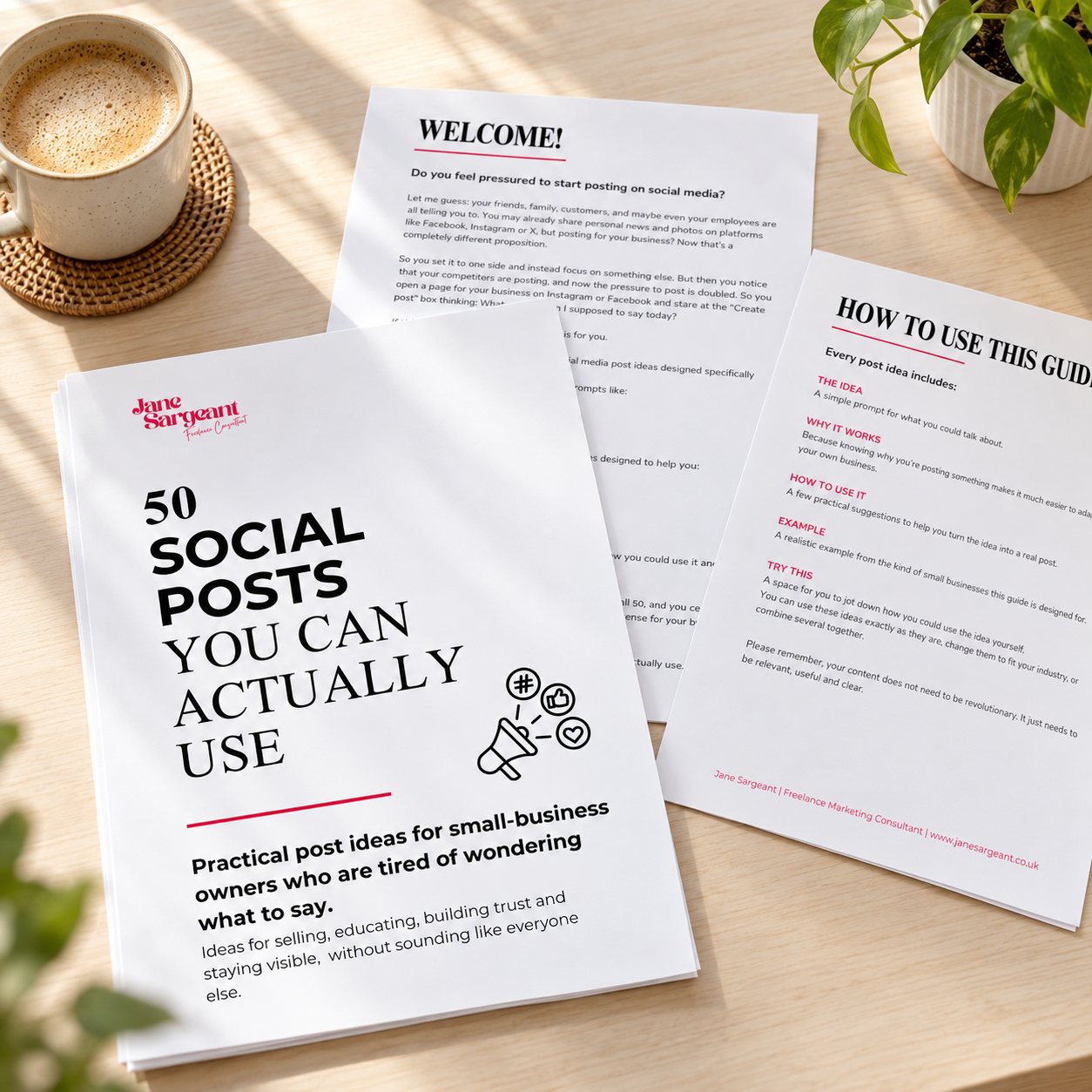
Most business owners aren’t short on things to do; you’re already dealing with customers, quotes, suppliers, admin, emails, and invoices, so coming up with a clever social media post on demand can feel like one job too many, which is why social media becomes stressful. You know you should probably be posting, you can see your competitors doing it, and maybe a customer has even told you they found another business through Instagram or Facebook. But knowing you should post, and knowing what to post, are two completely different things, which is why I created 50 Social Posts You Can Actually Use, a practical content guide for small-business owners who are tired of wondering what to say.
You don’t need to post every day
One of the first things I want to get out of the way is that you do not need to post every day, and you certainly don’t need to create something groundbreaking every time. A lot of small businesses make social media harder than it needs to be because they feel every post has to be original, entertaining, beautifully designed and clever. It doesn’t. Your content only needs to be relevant, useful and clear. A useful answer to a customer question can make a good post, and so can a photograph of something you’re working on, an explanation of how your service works, or a genuine customer review. Sometimes the best content is simply the information you already give customers every day.
Start by answering questions
If you’re struggling for content, one of the easiest places to begin is with the questions customers already ask you. What do people ask before they buy? What do they ask before they book? What comes up repeatedly in emails, phone calls or DMs? Those questions are already telling you what your audience wants to know.
A wedding photographer might often be asked “Do we really need a photographer for the whole day?” A builder might be asked, “Can you quote from photographs or do you need to visit first?” A personal trainer might explain whether you really need to train every day. You don’t need to invent an unusual topic. Just answer the question properly. It helps your existing audience and gives potential customers useful information before they even contact you.
Teach something useful
Educational posts work because they let people learn from you before they’re ready to buy. You could explain a common mistake, bust a myth, share a checklist, describe what “good” looks like, compare two options, or give one simple tip or first step someone should take.
The goal isn’t to give away every piece of knowledge you have, but eseful content demonstrates expertise far more effectively than repeatedly telling people how experienced you are.
Show people what you actually do
Another surprisingly rich source of content is simply showing your work. Business owners often forget that customers don’t see what happens behind the scenes. They may only see the finished result, but showing the process helps people understand the value of what you do.
You might show how your product is made, how your service works, or your process from start to finish. A before-and-after, a problem being solved, or what happens after someone enquires all work well too. A kitchen company could show the journey from measuring and design through to manufacture and installation. A bakery could show the kitchen at 5am while the day’s bread is being prepared. A decorator could show a damaged wall, the preparation involved and the finished result. Content like this makes your work feel more tangible.
Build trust instead of just saying “trust us”
One of my pet hates in marketing is vague copy like “We pride ourselves on excellent customer service.” It doesn’t really tell the customer anything. Trust comes from evidence: reviews, results, experience, consistency, customer stories, and your own lessons and opinions.
That means your content can include a customer review, a small win, a success story, or a lesson you learned the hard way. It can also cover an objection you often hear, something you do differently, something you’ve changed in your business, or something you wish more customers understood. A customer review is much stronger when you add context around it. What problem did the customer have? What did they buy? What changed afterwards? That turns a testimonial from a random nice quote into something far more meaningful.
Start actual conversations
Social media is supposed to be social. That doesn’t mean you need to post pointless engagement bait like “Coffee or tea? Tell us below!”, unless coffee or tea actually has something to do with your business.
Instead, ask things you genuinely want the answer to, such as “What part of running your business do you find hardest to stay consistent with?”, “What makes you abandon an online basket?” or “What’s one thing you wish was easier about ___?” These posts help you learn more about your audience while encouraging genuine interaction.
Some of the best conversational posts are simply observations: something you’ve noticed, something you’ve changed your mind about, or a thought you haven’t completely finished forming yet. Not every post needs to read like a miniature article.
And yes, you are allowed to sell
Small businesses sometimes become so worried about sounding “salesy” that they forget to tell people what they sell. Your audience can’t buy something they don’t know exists.
Sales content doesn’t have to involve shouting “BUY NOW!” It can simply explain what you sell, who it’s for, what problem it solves and what’s included. It can also say why you created it, how to buy it, who it might not be right for, and why now might be a good time to act. And occasionally, you can write a direct sales post with no elaborate story and no clever hook: here’s what I sell, here’s what it costs, here’s who it’s for, here’s how to buy it. That is perfectly legitimate marketing.
What if you still don’t know how to start the post?
Sometimes you know what you want to talk about but can’t think of the first sentence. That’s why I also included a bank of 100 social media hooks in the guide. They’re split into the same five categories (Educate, Show What You Do, Build Trust, Start Conversations and Sell), so you can find a starting point that matches the purpose of your post.
They include openings such as “One of the biggest mistakes I see is…”, “This is the bit customers don’t usually see”, “I learned this the hard way”, “Something I keep noticing…” and “If you’re struggling with ___, this is for you.”
There are also 50 calls to action, so you’re not ending every post with “Get in touch”. You can ask someone to comment, save, share, visit, enquire, book, download or buy, depending on what the post is actually trying to achieve.
One idea can become more than one post
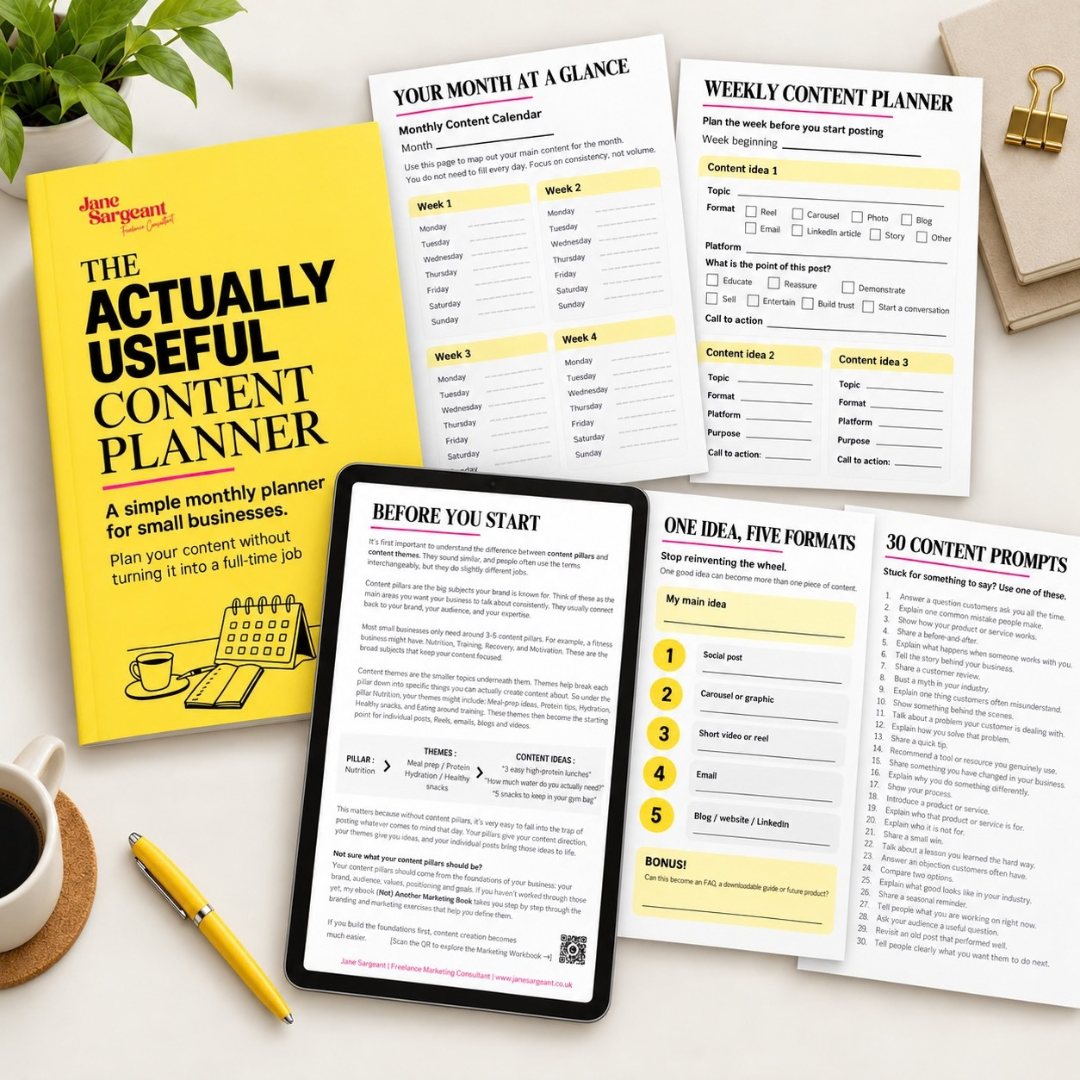
You also don’t need a new idea every time you post. One good idea could become a social post, a carousel, a short video, an email, or a blog post or LinkedIn article. That means a single useful idea can do much more work for you. You don’t need to keep reinventing the wheel. You just need to get better at spotting which ideas are worth reusing.
50 Social Posts You Can Actually Use
I created 50 Social Posts You Can Actually Use for small-business owners who want practical help with content without turning social media into a full-time job. The 66-page downloadable workbook includes 50 practical post ideas, 100 hooks and 50 calls to action. There are real-life examples for different types of small businesses, space to adapt each idea to your own business, a content repurposing page, a four-week planning worksheet, and simple guidance throughout.
It’s designed to help you stop staring at a blank screen and start creating content with a little more purpose. There’s no fluff, no generic motivational prompts and no pressure to post every day, just useful content ideas you can actually use.
50 Social Posts You Can Actually Use now and give yourself 50 genuinely useful things to talk about.