
I see it in businesses all the time. Someone decides it’s time to “do some marketing”, and suddenly everything happens at once. There are LinkedIn posts a couple of times a week. A burst of enthusiasm for Instagram. A few hundred pounds on Google Ads, a couple of emails to the customer list, a redesigned leaflet, and, because someone insisted, a tentative go at TikTok.
This continues for a few weeks. And then nothing much happens. There’s no sudden flood of enquiries. Sales haven’t doubled. The phone isn’t ringing off the hook.
So it stops. “That didn’t work.”
A couple of months later business goes quiet, the panic sets in, and someone suggests Facebook Ads. Brilliant, let’s try Facebook Ads. Money goes in, a few leads come out, and they’re not quite the right leads, so Facebook Ads clearly don’t work either. Stop. Then someone mentions SEO. Start. Stop. Instagram. Start. Stop. Email. Start. Stop.
And round and round we go.
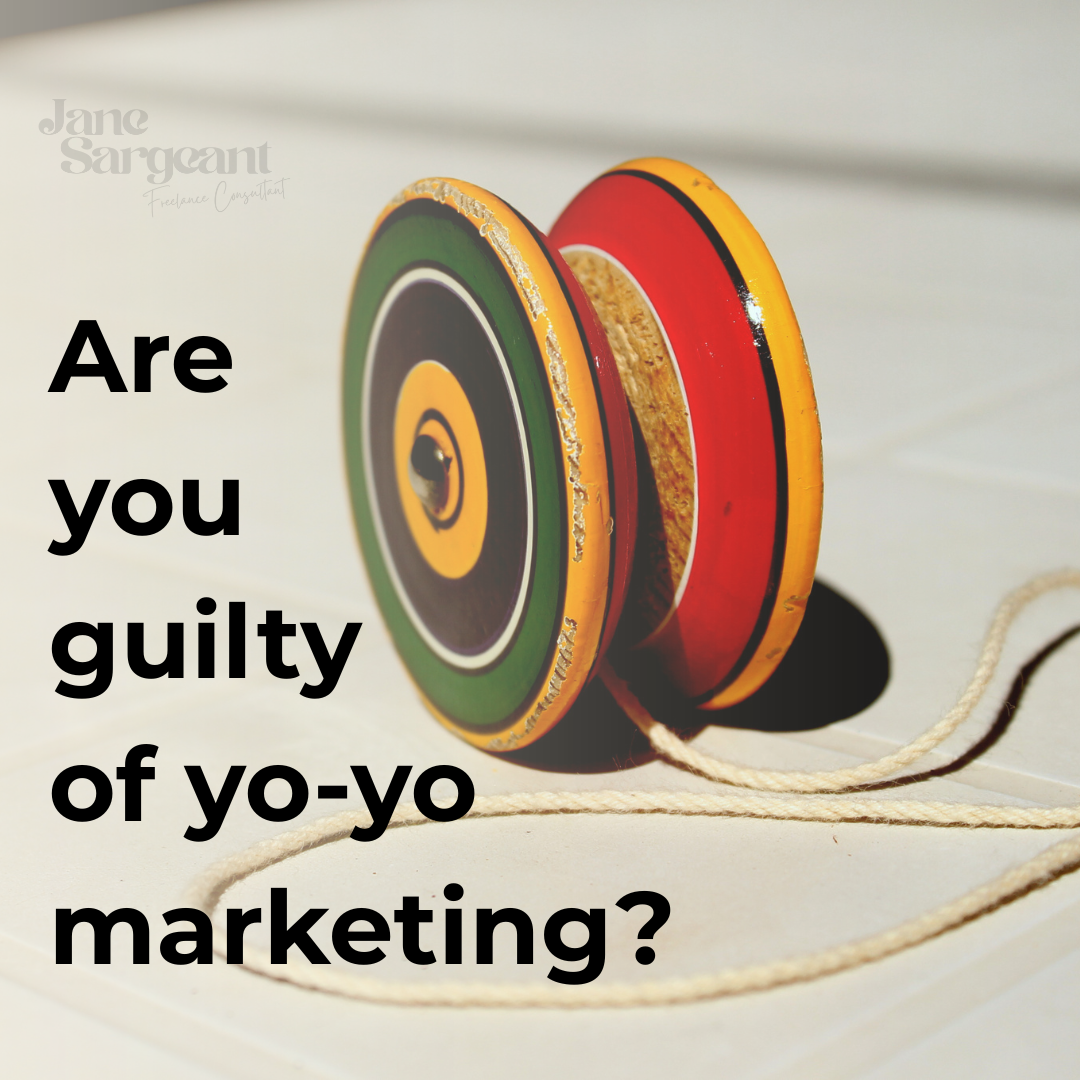
I call it yo-yo marketing, and just like yo-yo dieting, it can feel as though you’re constantly doing something while never really getting anywhere.
Two very different jobs
The root of the problem is that we expect long-term marketing to deliver short-term results, and those are two very different things.
If you need to generate £10,000 in sales this month, that’s a perfectly legitimate objective, and we can build a campaign designed to drive enquiries or sales now. But building a brand is a different job entirely.
Brand recognition doesn’t happen because you posted six times on Instagram. Trust isn’t built because somebody saw one advert. People don’t necessarily remember your business after encountering it once. It happens through repetition, over time.
They see you. Then they see you again. They recognise your name, then your colours. They begin to understand what you actually do. They read something useful you’ve written. Someone else mentions you in passing. They spot a customer talking positively about you. Six months later they have the problem you solve — and suddenly they remember you.
That’s the bit that’s impossible to measure after three weeks. It doesn’t mean nothing is happening.
Marketing is cumulative. Every useful piece of content, every positive review, every good customer experience, helpful email, conversation, photograph, article and recommendation adds another thin layer to how people see your business.
Which is exactly why constantly changing direction is so damaging. If every few months you change your message, change your look, abandon one channel, jump onto another and start talking to a completely different audience, you reset the clock each time. Recognition never gets the chance to build.
Consistency isn’t stubbornness
None of this means blindly carrying on with marketing that isn’t working. Consistency and stubbornness aren’t the same thing. Good marketing should be measured.
When I start working with a business, one of the first things I want to know is: where are we now? I take a snapshot; website traffic, social media, enquiries, engagement, search performance, whatever actually matters to that particular business.
But the more important question is what we’re trying to achieve. Ten thousand Instagram followers might look impressive, but they’re fairly useless if what you really need is five good commercial enquiries a month.
Then we make a plan, implement it, watch, measure, learn and adjust. That’s a very different rhythm from try, panic, stop, try something else.
Sometimes the data tells us something isn’t working. Good, that’s useful information, and we change it. Sometimes it tells us something is working, but not in the way we expected, which is useful too. And sometimes it simply tells us to keep going.
I think that last one is the hardest for businesses to sit with, because marketing rarely offers the instant gratification we’ve become accustomed to. You can’t see the person who’s been quietly following your business for eight months. You don’t know they’re reading your posts, or that their colleague mentioned your name, or that they’ve visited your website three times.
Not until one Tuesday morning, when an enquiry lands in your inbox saying: “I’ve been following you for a while…”
And it looks as though your marketing worked overnight. It didn’t. It worked over eight months.
Before you launch the next thing
So if your marketing currently feels like a yo-yo, pause before you start the next thing and ask yourself a few questions.
What are we trying to achieve? Who are we trying to reach? Why have we chosen this particular activity? How will we know whether it’s working? And perhaps most importantly — have we actually given it enough time?
You probably don’t need another marketing tactic. You more likely need a clear plan, good measurement, and the confidence to stick with it. Because good marketing isn’t about constantly doing more. It’s about doing the right things, for the right reasons, consistently enough to make a difference.

Leave a Reply